
The Hardest Conflict Is the One Within
Aug 04, 2026
When MyLinh Brewster Shattan reported to West Point in 1987, the Army still told women what they couldn't do. The combat arms (infantry, armor, artillery) were closed to us, period. She was drawn to aviation, one of the doors that was open, but even there, they named limits on what a woman could fly. She wasn't going to walk into a place that would tell her no before she'd started. So she chose around it.
She'll tell you now, plainly, that she regrets it. She watched other women fly and thought, I could have done that.
Thirty years later, her daughter Cara walked through the same gate. And nobody told her she couldn't do anything.
Everything was open to Cara and her female classmates, which meant that everything was also required of her.
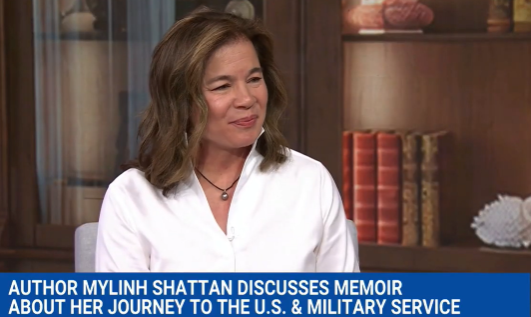
MyLinh emphasized this point in a recent NBC News Daily interview, "Cara had to get in the ring and take a punch to the face. I never had to do that." MyLinh was referring to a literal boxing ring, which our generation was exempt from. Women had to take a self-defense class, but not boxing.
Now, one generation later, everyone enters the ring. Boxing is a requirement for all plebes, regardless of gender.
It's just part of the job now. Open door. Full Standard. Period.
That's what progress costs. Not an easier path. The same hard one, finally ours, with every exemption stripped out.
That kind of progress matters, and it's slow, fifty years slow. It often comes through conflict, seen and unseen. And despite the progress we've made, this one isn't finished. Even now, there are voices at the highest levels asking whether those doors should've opened at all.
But regardless of the pace, or the fight it takes, there's another important conflict brewing underneath, quieter, and no one legislates it. MyLinh captures both.
The Conflict No One Talks About
MyLinh evacuated Saigon as a child, served as an Army officer, and spent nine years writing a memoir called Raising Athena about these two journeys, hers and Cara's, a generation apart. She joined me on The Healthy Leader Expert Forum to talk about it.
She shared that in the act of writing about her daughter, she had to open the closet to her own past.
"It was no exaggeration to say I was born of war, served during war, and my daughter was preparing for war. My life was defined by conflict. My relationships with others have often been defined by conflict. And perhaps the most difficult one for me was the conflict within." ~MyLinh Brewster Shattan
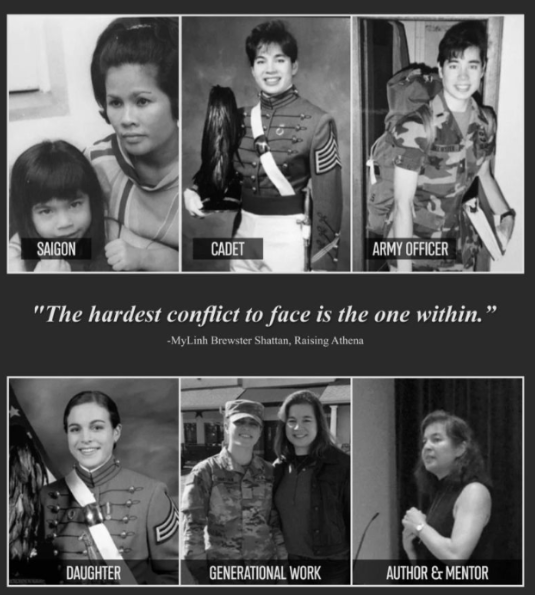
The conflict within is the thread MyLinh weaves quietly through the book, connecting the cultural crossroads of East and West, the tension between her Christian and Buddhist heritage, the military experiences, and the losses. And she brings you along, until you find yourself examining your own.
At war with her decision to leave the Army, and with the job she was handed in the post-Cold War drawdown, dismantling units and separating soldiers. At war with the idea of service itself, with whether she gave enough, especially beside classmates who buried soldiers or gave their own lives. And closest to the surface, a parent at war with her own emotions, knowing she had to let go of the child who was training to become a protector.
Humility is Healthy
MyLinh arrived at West Point already good. She was intelligent, athletic, and had a lot of grit. She walked on to the tennis team, ran track, and in her head, she’d earned her place, and 𝘴𝘩𝘦 𝘩𝘢𝘥 𝘵𝘩𝘦 𝘳𝘦́𝘴𝘶𝘮𝘦́ 𝘵𝘰 𝘱𝘳𝘰𝘷𝘦 𝘪𝘵.
Then she got into running formation. Turns out everyone around her had the same résumé, from a different hometown. She had a hard time keeping pace at first. She told me, “We can say this big fish, small barrel thing, but until you experience it it’s something else altogether...[you learn] you’re not as good as you think you are. It was a good lesson in humility.”
I love this story from MyLinh because it shows how when your ego is on the line, your body can read it as a threat. Defensiveness fires, the survival brain takes over, and the thinking brain, your prefrontal cortex, goes quiet. You cannot see clearly in that state.
But humility lowers the guard. As Michael E. Frisina, PhD, puts it, humility lowers defensiveness and opens the door to better thinking, learning, and connection. Drop the defensiveness and the executive brain comes back online. You can take in information again. You can be taught.
That isn't a virtue; it's the biological difference between a leader who keeps growing and one who quietly stops. The muscle MyLinh built falling out of runs at eighteen is the same one she needed at fifty to open that closet.
The second lesson helped her keep the closet door open: learning what to release. She reads Marcus Aurelius in four translations, and the line she carries is that when you accept your place as a small part of the cosmos, it frees you from what you cannot control. But she'll tell you it isn't a one-time realization.
You wake up, and you have to start again. You face what's yours to carry, you let go of what isn't, and tomorrow you do it again.
Do It Again
You don't get to choose the external. What's open, what's closed, which branch says no, whether you're the generation that takes the punch or the one that was spared it. That part was never yours to script.
Here's what MyLinh's story quietly insists on: the conflict isn't the problem. Expect it. The punch to the face, the run you fall out of, the closet you'd rather leave shut, that's not evidence you're failing. It's the shape growth actually takes. It can feel like the opposite of healthy while it's happening and still be the healthiest thing you do all year.
What's yours is what you do inside it. You look within. You remember who you are and where you came from. You open the closets of your own mind, the ones with the light off, stay humble enough to keep seeing, and let go of what was never yours to carry. Then, because none of it stays fixed, you get up tomorrow and do it again.
There's a helmet on the West Point coat of arms, and it belongs to Pallas Athena, goddess of wisdom and of war. Fully armored. The two fused in one figure. It's crowned the crest since the academy adopted it in 1898, over every cadet who's passed through the gates, Cara included. That's the quiet genius of MyLinh's title. Raising Athena isn't only a mother raising a daughter into a soldier. It's the work handed to the rest of us too: raising the Athena within, the one wise enough to keep looking inward, and warrior enough to keep showing up to the fight.
MyLinh spent nine years doing this on the page. You don't have to write a book. You just have to be willing to look.
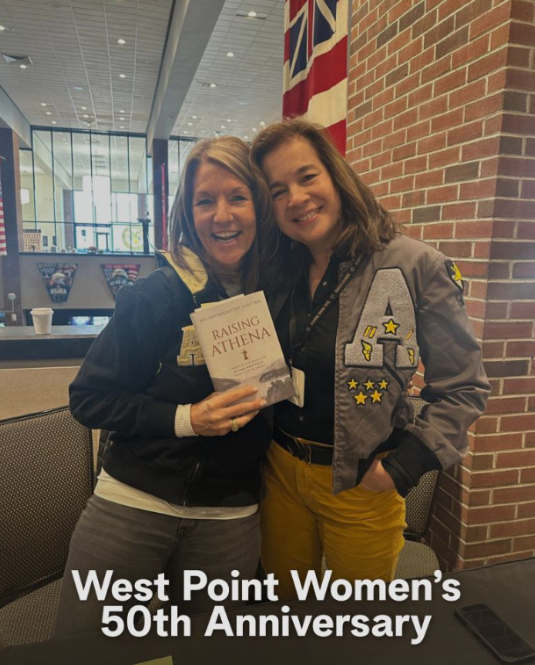
Raising Athena is tied to July 7, the fiftieth anniversary of the day in 1976 when women first reported to West Point as cadets. Fifty years of open doors and rising standards, and the hardest fight is still the one within.
--------------
You can watch the full Expert Forum conversation with MyLinh Brewster Shattan on YouTube (https://lnkd.in/gGdZVWtQ), or listen to Episode 63, "The Conflict Within," on Apple Podcasts: https://podcasts.apple.com/us/podcast/ep-63-the-conflict-within-mylinh-brewster-shattan/id1589836508
Then pick up Raising Athena at treehouseletter.com. Read it slowly. What she's done in those pages will inspire you.
---------------
Traci Fisher is an executive coach and founder of The Healthy Leader Group. A West Point graduate and former U.S. Army officer and helicopter pilot, she coaches C-suite and physician leaders at organizations like Cleveland Clinic, Johnson & Johnson, and Corning. She holds the ICF's Professional Certified Coach credential, is a board-certified health and wellness coach, and teaches with Red Team Thinking. She hosts The Healthy Leader Podcast, and her book, BEing a Healthy Leader, arrives in Fall 2026.